We’re Opening Soon in Historic Downtown Nolensville. Visit Us In Store.
Natural Diamonds
vs. Lab-Grown Diamonds
Two origins. Two beautiful choices. One honest conversation.
Natural and laboratory-grown diamonds share the beauty, brilliance and durability that make diamonds so remarkable. The defining difference begins with where and how they were created.
At J.Klos Fine Jewelers, we offer both—and we will help you compare them side by side so you can choose with confidence, without pressure or judgment.
Same sparkle. Different story.
The right diamond is not the one someone else tells you to want. It is the one that fits your priorities, your budget and the meaning you want it to carry.
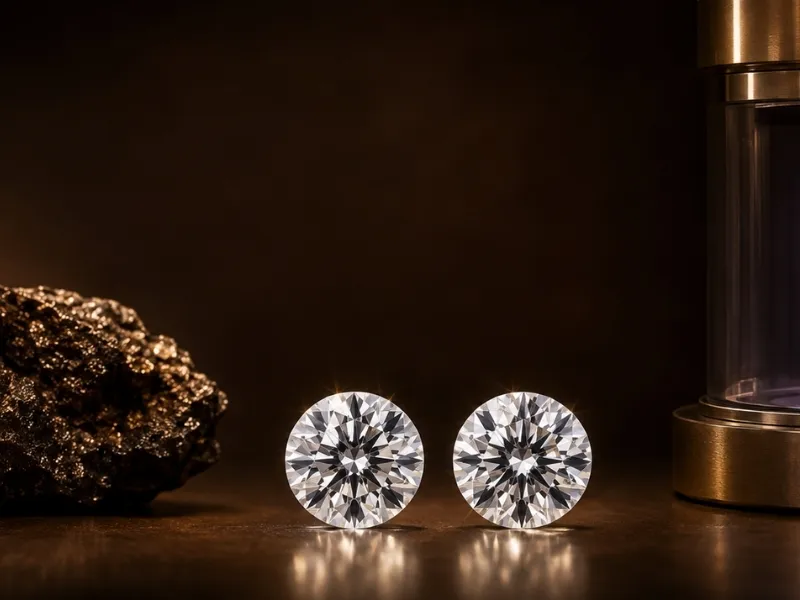
The simple truth: lab-grown is not fake
A Lab-Grown Diamond Is a Real Diamond
It is not moissanite. It is not cubic zirconia. It is not coated glass. Those are diamond alternatives. A laboratory-grown diamond is crystallized carbon with essentially the same chemical, optical and physical properties as a natural diamond.
Same carbon. Same potential for brilliance and fire. The same 10 rating on the Mohs hardness scale. Approximately the same refractive index of 2.42. Both are evaluated by the 4Cs: cut, color, clarity and carat weight.
The defining difference is origin. A natural diamond formed deep within the Earth over an immense span of time. A laboratory-grown diamond develops in a controlled environment over days or weeks using technology that recreates the conditions needed for diamond crystal growth.
Same diamond material. Different origin, timeline, rarity and price.
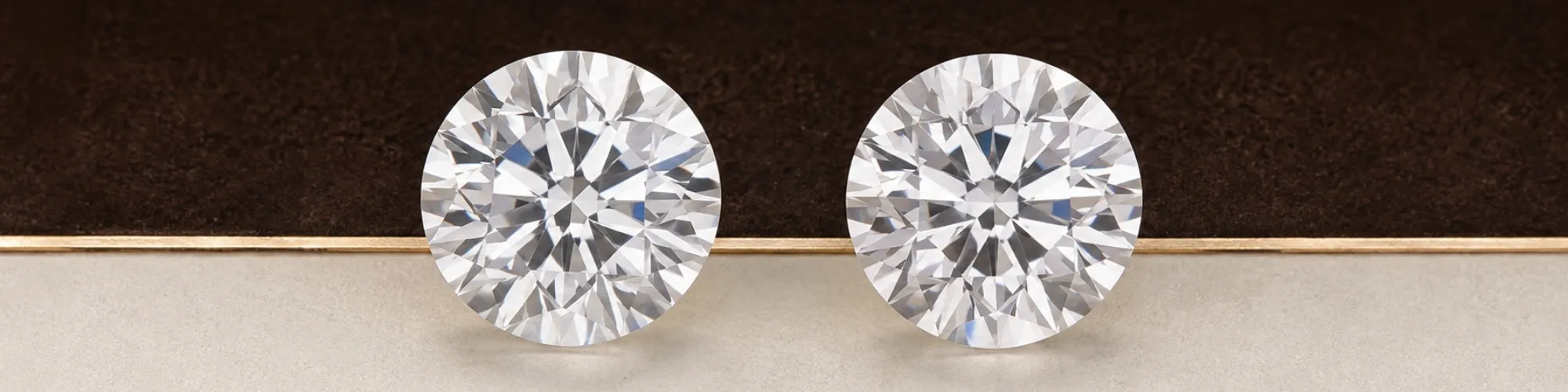
Natural vs. Lab-Grown at a Glance
Both can be beautiful, durable and expertly graded. Here is where the meaningful differences appear.
| Point of comparison | Natural diamond | Laboratory-grown diamond |
|---|---|---|
| Origin | Formed deep within the Earth | Grown in a controlled laboratory |
| Formation time | Millions to billions of years | Typically days to weeks |
| Composition | Crystallized carbon | Crystallized carbon |
| Hardness | 10 on the Mohs scale | 10 on the Mohs scale |
| Appearance | Can show exceptional brilliance fire and sparkle | Can show exceptional brilliance fire and sparkle |
| Grading | Evaluated by the 4C's report identifies natural origin | Evaluated by the 4C's report identifies laboratory-grown origin |
| Rarity | Finite natural occurrence and geological scarcity | Can be produced as technology and capacity expand |
| Initial price | Generally higher for comparable specifications | Generally lower for comparable specifications |
| Market history | More established secondary market, though resale is never guaranteed | Less established secondary market; pricing continues to evolve |
| Often chosen for | Natural rarity, tradition, history and heirloom meaning | Size, specifications, design freedom and budget flexibility |
The Natural - Diamond Story
What Is a Natural Diamond?
A natural diamond is one of the Earth’s rarest creations.
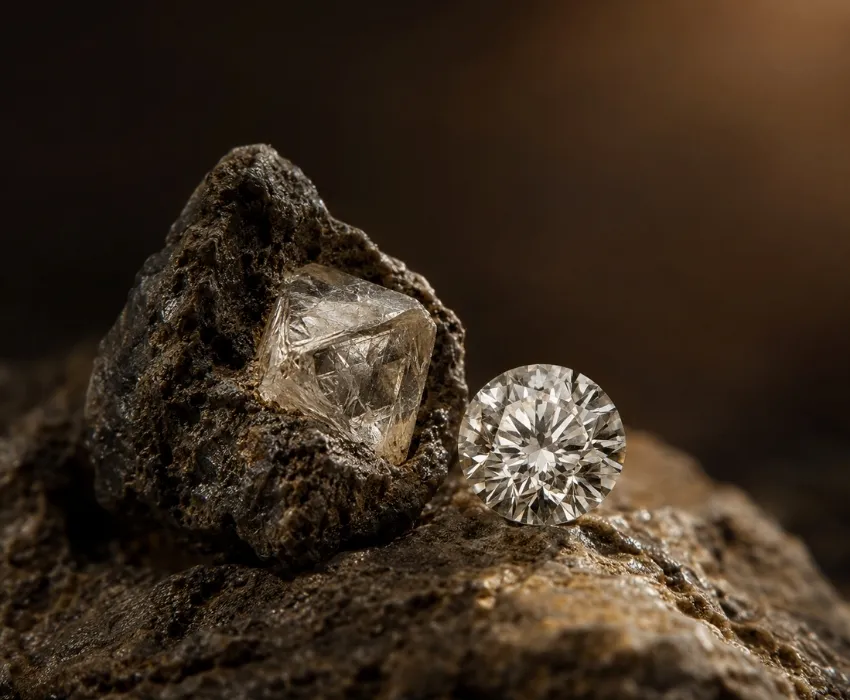
Natural diamonds formed under extraordinary heat and pressure deep beneath the Earth’s surface, with many dating back billions of years. Ancient volcanic activity eventually carried them close enough to the surface to be discovered.
Each natural diamond is a limited and individual piece of the Earth’s history. Its inclusions and subtle characteristics are part of the story of how it formed.
Why choose a natural diamond?
A natural diamond may be the right choice if you value:
- A rare gemstone created entirely by nature
- A connection to billions of years of Earth’s history
- The tradition and symbolism associated with natural diamonds
- An heirloom intended to be passed from one generation to the next
- A more established market history for rare, high-quality diamonds
For many people, the remarkable natural journey of the diamond is as meaningful as its beauty.
The Laboratory-Grown - Diamond Story
What Is a Laboratory-Grown Diamond?
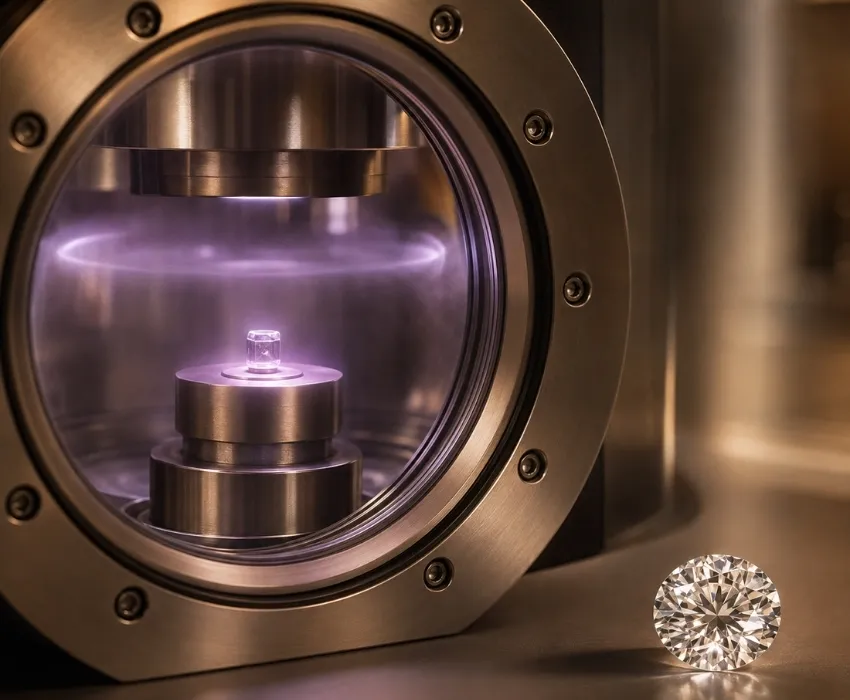
A laboratory-grown diamond is created in a controlled environment using advanced technology that produces diamond crystal growth.
The two primary methods are High Pressure, High Temperature (HPHT) and Chemical Vapor Deposition (CVD). Both begin with a small diamond seed. Carbon atoms build around that seed until a diamond crystal has grown. It is then cut and polished using the same craftsmanship applied to natural diamonds.
Why choose a lab-grown diamond?
A laboratory-grown diamond may be the right choice if you value:
- The beauty and durability of a diamond at a lower initial price
- A larger diamond or higher color and clarity within a particular budget
- Greater flexibility when creating a custom engagement ring or jewelry design
- A modern, technology-driven origin
- Making visual impact and personal style the highest priorities
Laboratory-grown diamonds can be excellent choices for engagement rings, anniversary jewelry, earrings, pendants and statement pieces.
The Questions Customers Actually Ask
01
Can You See the Difference?
In most cases, natural and laboratory-grown diamonds of comparable quality look the same to the unaided eye. Even a trained jeweler cannot reliably determine origin with a loupe or a basic tester alone.
Their growth histories leave microscopic patterns and trace characteristics that specialized instruments and gemological laboratories can identify. Many laboratory-grown diamonds also carry a microscopic girdle inscription. This is why accurate documentation and clear disclosure matter.
02
Does One Sparkle More Than the Other?
No. A diamond’s sparkle depends primarily on the quality of its cut—not whether it formed beneath the Earth or inside a laboratory.
A beautifully cut natural diamond and a beautifully cut laboratory-grown diamond can both be breathtaking. A poorly cut diamond of either origin can look dull. At J.Klos Fine Jewelers, we look beyond the paperwork and help you choose a diamond that performs beautifully in real life.
03
What About Price and Long-Term Value?
Laboratory-grown diamonds generally have a lower initial price than natural diamonds of comparable size and quality. That can allow a customer to choose a larger diamond, higher specifications or a more elaborate design within the same budget.
Natural diamonds generally have a more established secondary market because of their geological rarity and limited natural supply. Laboratory-grown diamond pricing and resale markets continue to change as production technology and availability evolve.
Neither should be presented as a guaranteed financial investment. A diamond should first be chosen for its beauty, meaning and the memories it will represent.
04
Which Diamond Is Right for You?
There is no single answer that is right for everyone.
Choose natural if the ancient origin, rarity, tradition and heirloom story are central to what the diamond means to you. Choose laboratory-grown if maximizing size, specifications and design flexibility within your budget matters most.
The best way to decide is to compare beautiful examples of both side by side—and then choose the one you keep thinking about.
Frequently Asked Question
Are lab-grown diamonds real diamonds?
Yes. They are crystallized carbon with essentially the same chemical, physical and optical properties as natural diamonds. Their origin is laboratory-grown rather than geological.
Are lab-grown diamonds the same as moissanite or cubic zirconia?
No. Moissanite and cubic zirconia are diamond alternatives made from different materials. A laboratory-grown diamond is diamond material.
Will a lab-grown diamond last?
Yes. Like a natural diamond, it rates 10 on the Mohs hardness scale and is suitable for everyday jewelry when properly set and cared for.
Can a jeweler tell the difference by looking at it?
Not reliably with the unaided eye, a loupe or a basic tester alone. Specialized screening, inscriptions and gemological-laboratory analysis are used to confirm origin.
Are all lab-grown diamonds made in the United States?
No. Laboratory-grown diamonds are produced in facilities around the world. Ask about the documented origin of a specific diamond if U.S. production is important to you.
Are lab-grown diamonds automatically more environmentally friendly?
Not always. Environmental impact varies with the production method, energy source and individual producer. Ask for specific sourcing information rather than relying on a blanket claim.
Which holds value better?
Natural diamonds generally have a more established secondary market, while laboratory-grown pricing continues to evolve. Resale value is never guaranteed for either choice.
Compare Natural and Lab-Grown Diamonds in Nolensville
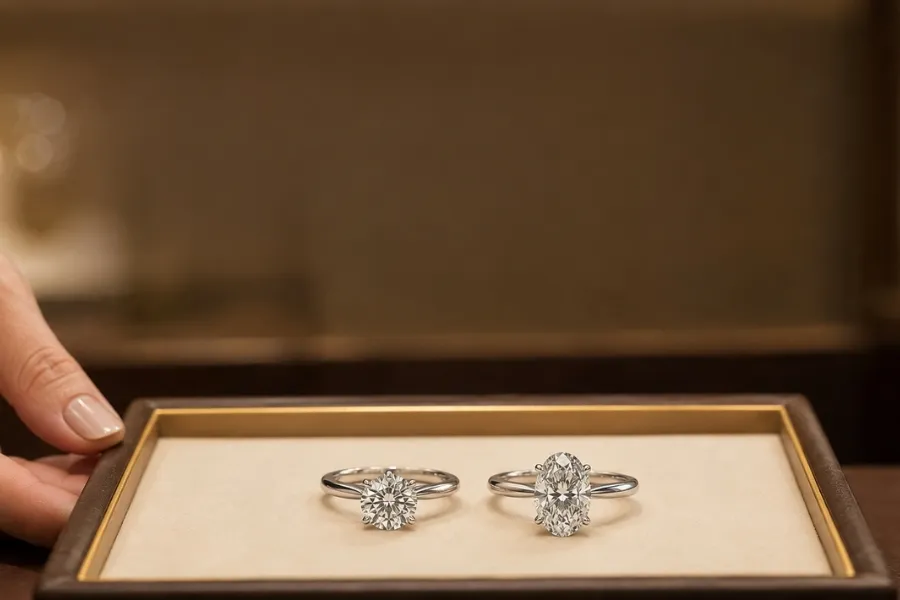
Visit J.Klos Fine Jewelers in Historic Downtown Nolensville and compare carefully selected natural and laboratory-grown diamonds in person.
We will show you how they look in real light, explain quality and pricing in plain English, and help you choose without pressure or judgment. Our purpose is not to tell you which diamond you should want. It is to help you find the one you will love.
CONTACT
- 7278 Nolensville Rd, Nolensville, TN 37135, United States
- (615) 886-0161
- info@jklosfinejewelers.com
-
Store Hours:
Tue - Sat: 10:00am - 5:00pm
Newsletter
Be the first one to know about new arrivals & get private previews
One relationship. A lifetime of trust.
© 2026 J.Klos Fine Jewelers. All Rights Reserved